Tile Vacation - Triple Match
VisionStudio(HK)Casual
4.91.07K Reviews
- Version
- 1.52.0
- Installs
- 5.00M
- Age Rating
- Everyone
Screenshots

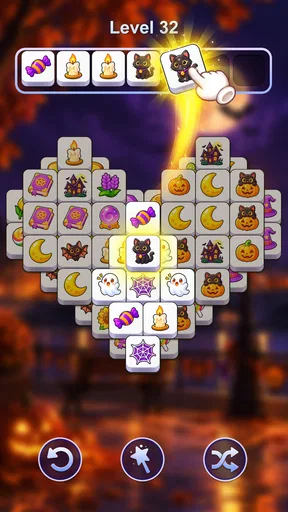
Our Review of Tile Vacation - Triple Match
 Analysis by Appyee
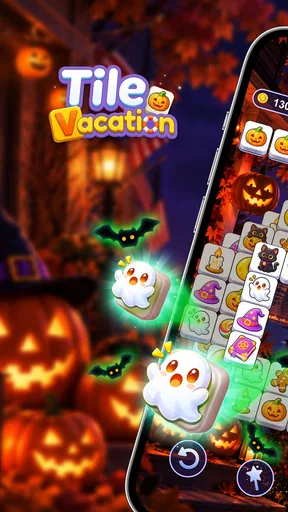
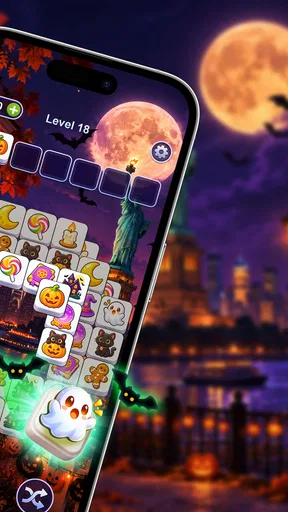
I spent time with Tile Vacation - Triple Match as the kind of casual game I could open without preparing for a long session. Its basic idea is easy to understand: clear groups of three matching tiles and work through a relaxed, holiday-themed puzzle experience. That simplicity is its main attraction, but it also means the game depends heavily on how smoothly each short session feels, how clearly the board communicates its options, and whether the challenge remains interesting after the first few rounds.
My overall impression is positive. This is a free casual game from VisionStudio(HK), aimed at players who want a gentle matching activity rather than a complicated strategy title. It is listed for everyone, and the broad audience makes sense: the controls are approachable, the objective is explained through play, and there is no need to learn a large rule set before starting. With an average rating of 4.9 from around 252 thousand ratings and more than 5 million installs, it has clearly found a substantial audience.
How the game feels in everyday play
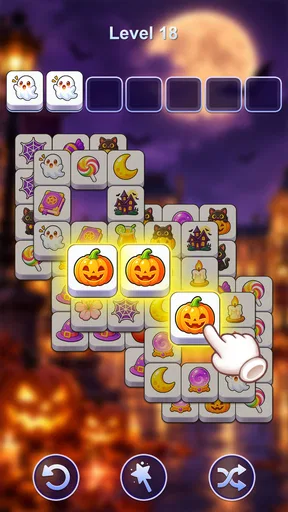
The most comfortable way to play is in short bursts. I can imagine opening it while waiting for an appointment, taking a few minutes after lunch, or winding down before bed. The triple-match format gives each move a clear purpose, so I am rarely wondering what the game expects me to do. I look for three identical tiles, select them, and try to keep the available space under control while planning the next group.
That last part matters more than the cheerful presentation might suggest. Matching three tiles is simple, but choosing the wrong set at the wrong time can reduce the useful space on the board. I found myself switching between immediate matches and slightly more patient choices. A visible trio is not always the best trio if taking it prevents a more useful combination from becoming available. This gives the game a small planning layer without turning it into a demanding puzzle simulator.
The vacation theme supports the relaxed mood, but the real value is the rhythm of the board. Moves are quick, feedback is easy to read, and the game does not require a long explanation. For players who enjoy familiar tile-matching games but prefer a softer presentation, this is a comfortable entry point. For someone looking for deep strategy, competitive ranking, or a story-driven adventure, the appeal will probably fade sooner.
Speed expectations and the first few minutes
In my experience, the game is built around immediate interaction rather than lengthy preparation. A casual title like this earns its place on a phone by letting the player get from opening the app to making a useful move with little mental overhead. Tile Vacation generally fits that expectation. The board is understandable quickly, and the pace comes from deciding what to remove rather than waiting through complicated systems.
Perceived speed is not only about loading. It is also about whether tapping a tile feels direct, whether the board updates without confusing pauses, and whether the visual presentation gets in the way of the next decision. Here, the uncluttered triple-match structure helps. I can focus on the available tiles instead of managing several unrelated menus or resources at once.
There is a trade-off in this design. Because the game is so accessible, the opening experience may feel familiar to anyone who has played several match-three or tile-clearing games. It does not try to overwhelm the player with a large set of mechanics immediately. That is good for speed and comfort, but players who want a dramatic opening or a steep learning curve may find it too restrained.
A useful habit is to treat the first moments of a level as a scanning phase. Rather than tapping the first obvious trio, I look across the board for tiles that appear to connect several possible matches. This makes the game feel more thoughtful without slowing it down. It is also a practical way to reduce unnecessary reshuffling of my attention when the board becomes busier.
What happens during heavier play
The heavier moments are not necessarily long loading screens; they are the points when I play repeatedly and pay closer attention to the board. Several consecutive rounds can make a casual game feel more demanding because visual decisions arrive continuously. The important question becomes whether the interface remains readable when I am moving quickly, not whether the rules are hard to remember.
Tile Vacation benefits from having one central action: selecting matching tiles. That keeps the mental workload lower than in casual games that combine tile play with construction, collection, or several upgrade screens. If I want a game for a short break, this focus is useful. I can stop after a round without feeling that I have left a complicated task unfinished.
Still, extended sessions expose the limits of a simple format. Once the basic matching pattern becomes familiar, the experience depends on the variety and arrangement of boards rather than on a large mechanical system. I would recommend it more strongly for rotating short sessions than for marathon play. After a while, the relaxing quality can become repetitive if I expect every round to introduce a major surprise.
My best approach is to use it as a reset between demanding tasks. I play for a defined break, concentrate on a few careful moves, and close it when the activity stops feeling refreshing. That makes the low-pressure design work in its favor. Trying to force a very long session is less convincing, especially for players who need constant novelty.
Stability, interruptions, and recovering a session
For a game this straightforward, reliability means more than avoiding obvious crashes. It means being able to return to the board after a distraction, understand the current state, and continue without having to relearn what was happening. That recovery experience is especially important on a phone, where calls, messages, and quick app switches can interrupt a casual session at any moment.
The focused structure makes recovery relatively easy from a player’s perspective. I do not need to remember a complicated chain of actions or a large inventory before continuing. If I put the phone down in the middle of a short break, the central goal remains clear when I come back: inspect the tiles, identify useful groups, and avoid filling the available holding space carelessly.
I would not describe the game as a replacement for a fully offline tabletop puzzle or a guaranteed no-interruption experience. Mobile play can still depend on the device and the surrounding environment, and the game includes optional purchases ranging from $0.99 to $28.99 per item. That pricing range is worth noticing before handing the phone to a child or letting someone else play on a shared account. The game itself is free to start, but “free” does not mean every optional transaction is irrelevant.
One practical recovery tip is to pause mentally before returning to a board after an interruption. I first identify the tiles already placed or exposed, then decide whether I have a safe trio or need to create space. Tapping immediately after reopening is an easy way to make a careless move, particularly when I have forgotten which tiles were part of an emerging combination.
Device constraints and who will enjoy it
The stated minimum operating-system requirement is Android 6.0, which places the game within reach of many older Android phones and tablets. That does not guarantee identical behavior on every device, but it does suggest that the basic software requirement is not aimed only at recent hardware. The current version is 1.52.0, so keeping the installation current is sensible when the platform offers an update.
Because this is a visual tile game, screen size can affect comfort more than raw processing power. On a small phone, tiles and surrounding details may feel more crowded, especially during a board that demands quick scanning. A larger display can make groups easier to compare, while a lower-brightness setting may be more comfortable during evening play. These are small adjustments, but they matter when the game is used as a frequent break rather than a one-time download.
I would also consider the age rating before sharing it with younger players. The game is rated for everyone, which matches its gentle casual positioning. Even so, the purchase range deserves adult attention on a family device. If the goal is a simple distraction with no complicated controls, it is a reasonable choice. If the goal is a completely transaction-free experience for a child, I would use the device’s purchase protections rather than relying only on the game’s friendly presentation.
Players with limited storage or older hardware may appreciate the modest concept, but performance cannot be judged solely by the type of puzzle. Visual effects, background activity, and the phone’s general condition can all influence perceived smoothness. I did not need demanding controls or rapid reflexes to enjoy it, which makes occasional stutter less disruptive than it would be in an action game, but smooth feedback still improves confidence when selecting a tile.
Three useful ways to play more deliberately
First, I avoid clearing every obvious trio immediately. I check whether a less obvious group can open access to another match or keep the temporary holding area more flexible. This is a small change in behavior, but it turns the game from simple tapping into a calm spatial-planning exercise.
Second, I use the game as a controlled pause rather than an endless feed. I decide before starting whether I want one short round or a longer break. That boundary helps preserve the relaxing quality and prevents the familiar pattern of continuing only because the next board is available. For people trying to reduce passive scrolling, a defined puzzle session can feel more intentional.
Third, I pay attention to visual fatigue. Matching similar shapes for a long time can become tiring even when the rules remain easy. I take a break when I start selecting tiles automatically, because that is usually when mistakes increase. A slightly larger display, comfortable brightness, and short sessions make the experience more pleasant than simply playing for as long as possible.
These habits also reveal the game’s main trade-off. It rewards attention, but not the kind of attention demanded by a complex tactics game. The satisfaction comes from making a clean sequence and keeping the board manageable. If that modest goal sounds appealing, the design has a clear purpose. If you need a stronger sense of progression, narrative, or mastery, a deeper puzzle alternative will likely serve you better.
How it compares with familiar casual alternatives
Compared with a traditional match-three game built around swapping gems or candies, this title puts more emphasis on selecting groups and managing the consequences of each choice. There is less need for fast pattern recognition in a moving grid and more need to notice which tiles can safely leave the board. That makes it feel calmer, though it may also feel less energetic for players who enjoy chain reactions and flashy cascades.
Compared with classic solitaire-style mobile games, it offers a more tactile visual search. I am not arranging cards by suit or sequence; I am looking for three compatible tiles while considering space. Compared with a pure hidden-object game, the matching rule gives each observation a clear action. These differences make it suitable for someone who wants a light puzzle with a little planning, not merely a passive visual activity.
The game is less suitable than a competitive puzzle title for players who want head-to-head pressure, detailed leaderboards, or a high-skill tournament loop. It is also less suitable than a narrative casual game for anyone who needs characters and story to justify continued play. Its strength is narrower and more honest: it provides a cozy tile-clearing routine that can fit around everyday life.
The free entry point makes trying it easy, but I would still approach optional purchases carefully. A player who enjoys the core loop may find them convenient, while another player may prefer to keep the experience entirely within the free portion. Since the listed items range from less than a dollar to nearly thirty dollars, I would not make a purchase decision casually, particularly on a shared device.
Who should install it, and who should skip it
I would recommend it to people who like calm matching games, short sessions, and rules that become clear through direct interaction. It is a good fit for a commute break, a quiet evening, or a few minutes between responsibilities. It can also suit players who enjoy making small tactical choices but do not want a demanding strategy interface.
I would be more cautious about recommending it to someone who quickly gets bored with repeated tile patterns. The relaxed structure is a benefit only if relaxation is the goal. Players seeking action, a strong story, multiplayer competition, or a complex long-term build system should choose another category instead of expecting this game to transform into something more ambitious.
Parents and people sharing devices should remember both sides of the package: the everyone rating makes the content broadly approachable, while optional purchases still call for sensible account controls. Older Android users can consider it because Android 6.0 is the listed minimum, but the actual comfort of play will depend on screen size, general device condition, and how smoothly that particular phone handles the visual presentation.
My performance verdict
After using it as a short-session puzzle, I see Tile Vacation as a focused and approachable casual game rather than a technically demanding showcase. Its perceived speed comes from a simple objective and a board that can be understood quickly. Its heavier-use weakness is repetition: the longer I play continuously, the more important board variety and personal tolerance for the format become.
The game’s reliability is helped by its uncomplicated central loop, because returning to a tile board is easier than recovering a complex strategy sequence. Device compatibility is reasonably welcoming on paper, with support beginning at Android 6.0, although no minimum requirement can guarantee the same smoothness on every phone. The current release, 1.52.0, is the version I would look for when installing or updating.
VisionStudio(HK) has made a game that knows what it wants to be. It is free, rated for everyone, and positioned as a gentle triple-match escape rather than a demanding challenge. I like that clarity. My recommendation is to try it if you want a cozy puzzle for brief, repeatable breaks, while keeping expectations realistic about depth and long-session variety.
My final advice is simple: choose it for calm, deliberate tile matching, not for nonstop novelty. With over 5 million installs and a 4.9 average, it has plenty of evidence of broad appeal, but the right choice still depends on your habits. For me, it works best when I play carefully, stop before the board becomes tiring, and treat the vacation theme as a pleasant setting for a compact puzzle rather than as a promise of a large adventure.
Verdict
Strengths of Tile Vacation - Triple Match
- Relaxing gameplay suited to short breaks
- Bright visuals make tile patterns easy to recognize
- Progression adds variety beyond basic matching
- Works well for casual players of different ages
- Simple controls require no lengthy tutorial
Limitations of Tile Vacation - Triple Match
- Later levels can become noticeably more difficult
- Limited strategic depth may reduce long-term appeal
- Some rewards may require watching optional ads
- Mistakes can be frustrating when layouts feel tight
- Requires patience when waiting for lives or bonuses
Similar Picks in This Category
View All
My Talking Angela
Outfit7 Limited4.2

My Talking Tom
Outfit7 Limited4.3

Pou
Zakeh4.2

My Talking Tom 2: Pet Game
Outfit7 Limited4.3

Candy Crush Saga
King4.6

Bridge Race
Supersonic Studios LTD4.1
Frequently Asked Questions
What is Tile Vacation - Triple Match, and how do you play it?
Tile Vacation - Triple Match is a relaxing tile-matching puzzle game built around finding and combining three identical tiles. During each level, you tap available tiles and place them in the tray, then clear sets of three matching pieces. The objective is to remove every tile before the tray becomes full. As you progress, layouts become more challenging and may require careful planning rather than quick tapping.
Is Tile Vacation - Triple Match free to download and play?
Tile Vacation - Triple Match can generally be downloaded and played for free, although the game may include optional in-app purchases. These purchases can provide extra boosters, additional lives, coins, or other conveniences, but they are not necessarily required to enjoy the main levels. Players should review the store listing and device payment settings because prices, advertisements, and available purchase options may vary by platform or region.
Does Tile Vacation - Triple Match require an internet connection?
The game may allow some basic matching levels to be played without a constant internet connection, which is useful when traveling or using mobile data sparingly. However, features such as advertisements, cloud synchronization, event content, rewards, purchases, and certain updates may require access to the internet. Offline availability can also change after updates, so it is best to test the game before relying on it during a trip.
Are there advertisements, boosters, or limited lives in the game?
Tile Vacation - Triple Match uses common free-to-play mechanics that may include advertisements, optional boosters, and restrictions such as lives or attempts. Ads can sometimes be watched to receive an extra reward, while boosters may help shuffle tiles, undo a move, or recover from a difficult board. These systems are convenient, but players who prefer uninterrupted gameplay should expect advertising or optional purchases to be part of the experience.
Is Tile Vacation - Triple Match suitable for children and casual players?
Tile Vacation - Triple Match is easy to understand and generally suitable for casual players who enjoy relaxing puzzle games, including people who prefer short sessions. Nevertheless, parents should check the current age rating, privacy information, advertising practices, and in-app purchase settings before allowing children to play. Later levels can become more demanding, and the presence of optional purchases means parental controls may be worthwhile on shared devices.
Play our best games!


